
The End of Quality Investing?
5 extracted signals · 5 resolved · 0 still active
 The Patient InvestorIndependent analyst profile
- Source published
- 24 May 2026, 13:45 UTC
- Recorded by Tahlil Plus
- 24 May 2026, 14:06 UTC
AI-generated source summary
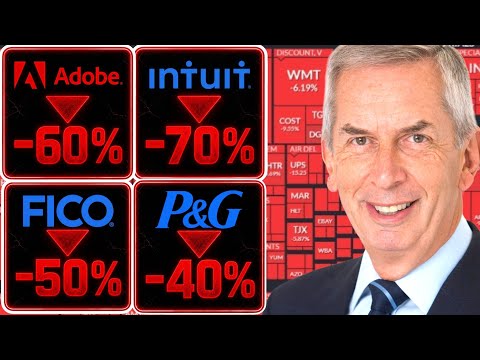
The video discusses a quality investing strategy, highlighting the underperformance of several quality stocks like FICO, SPGI, MA, MCO, INTU, and AKRE over the past year. The analysis suggests that while these companies possess strong fundamentals, their stock prices have declined significantly. The speaker implies that investors often overemphasize quality and undervalue price, leading to missed opportunities. The core idea is to combine quality with value, looking for quality companies at a reasonable price with a margin of safety. For example, if a company's intrinsic value is $200 and it's trading at $180, a 10% margin of safety is achieved. The strategy involves buying in smaller positions at lower prices to average down costs, which is presented as a more prudent approach than chasing growth stocks without considering valuation.
AI-generated summary based on the source content.
Signal outcomes at a glance
Evaluation CompleteSignals in this source





Evidence and evaluation progress
- Original source published
The analyst published the original source item.
- Source recorded by Tahlil Plus
The public source was preserved as the evidence record for this case.
- Market predictions extracted
5 eligible signals linked to this case.
- Source processing completed
Source analysis and structured extraction completed.
- Outcome tracking started
Tahlil Plus began monitoring the extracted predictions.
- First prediction resolved
The first evaluable outcome in this case reached a terminal result.
- Case evaluation completed
All evaluable predictions in this case reached terminal outcomes.
The Patient Investor
Platform-wide history, separate from this source evaluation.
Tahlil Plus independently records and evaluates public market predictions. Extraction may be AI-assisted and results follow the Tahlil Plus methodology. This information is not financial advice.